











Is eSIM Better Than Physical SIM?

For years, preparing for an international trip involved a familiar routine: finding a paperclip to eject a SIM tray and swapping small plastic cards. However, with the widespread adoption of digital technology, the eSIM (embedded SIM) has become a mainstream option for travelers and business professionals.
But is an eSIM truly better than a traditional physical SIM card? The answer often depends on your specific needs, your device, and your travel habits. This guide analyzes the practical differences to help you choose the right connection method for your next journey.
User Experience: Changing Phones (iPhone to Android)
A common concern for users revolves around device switching. What happens to your connectivity when you upgrade or switch phones?
The Physical SIM Experience
Moving a physical SIM is mechanical. You eject the card from your old iPhone and insert it into your new Android device. It is a tangible process. However, the small size of the card makes it prone to being dropped or lost during the swap, especially if done in a rush.
The eSIM Experience
Since the eSIM is digital, you cannot physically move it.
-
- The Process: If you switch from an iPhone to an Android, you typically need to install a new eSIM profile on the new device, as direct transfer between different operating systems can be complex.
-
- The Solution: For travelers, this digital process can actually be smoother. Providers like Volarsky deliver the activation details via email. If you change phones before a trip, you can simply scan the QR code on the new device to activate your plan, avoiding the need to visit a retail store or wait for a new card to ship.
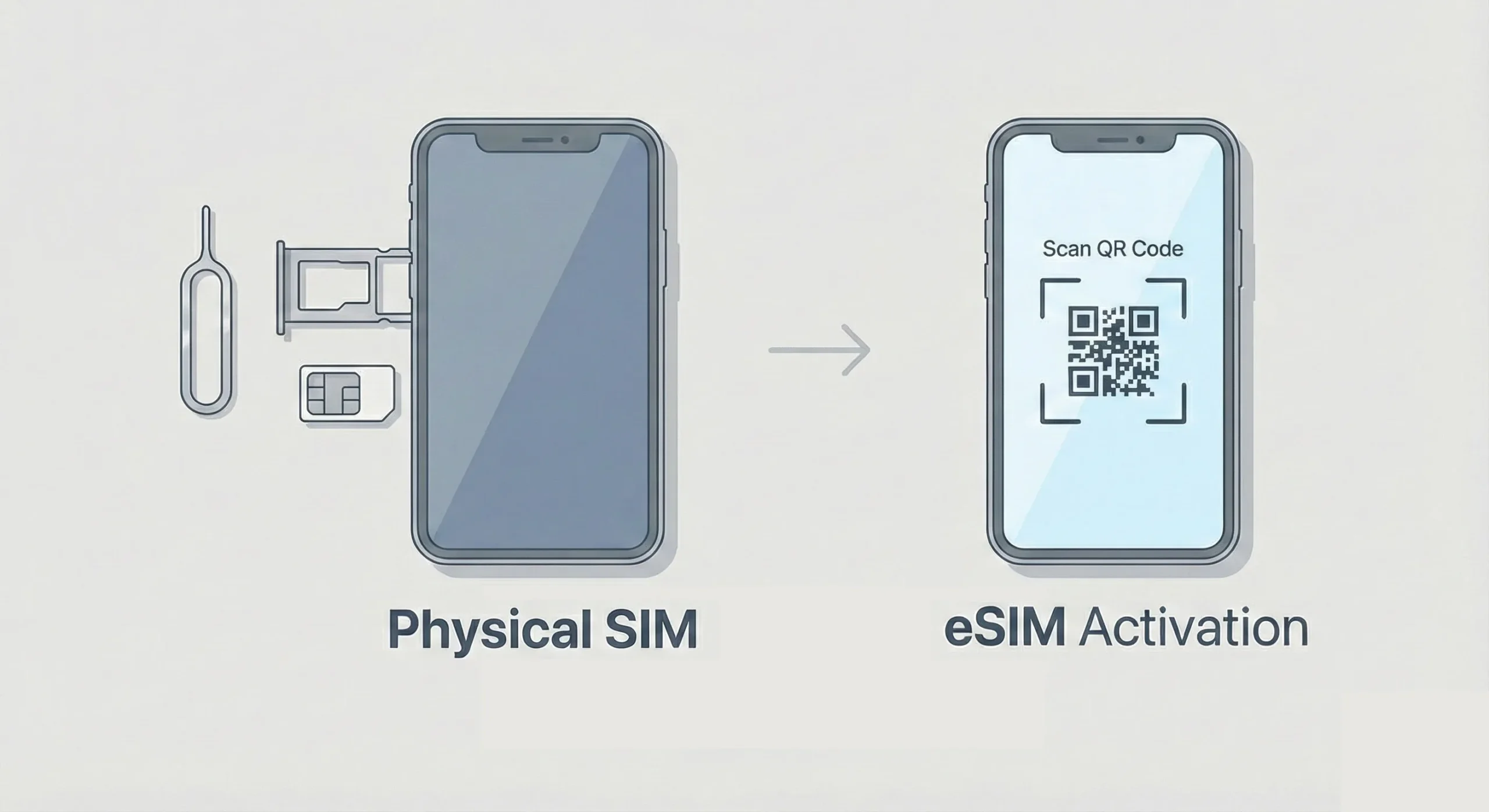
Is eSIM Better Than Physical SIM; eSIM
Scenario Analysis: When to Choose eSIM vs. Physical SIM
To understand if an eSIM is better, it is helpful to look at specific travel scenarios.
Scenario 1: Short-term Business Trips
For business travelers flying to cities like New York or Tokyo for a few days, efficiency is key.
-
- Physical SIM: Buying a card upon arrival often involves finding a kiosk and queuing, which consumes valuable time.
-
- eSIM: You can purchase and set up an eSIM before departure. Upon landing, the connection is typically ready as soon as you turn off airplane mode. For tight schedules, the eSIM offers a significant time-saving advantage.
Scenario 2: Multi-Country Tourism
If your itinerary includes multiple countries, such as a tour through France, Germany, and Switzerland:
-
- Physical SIM: You might need to swap cards at each border or find a roaming-enabled physical card, which can be expensive or hard to find.
-
- eSIM: Many eSIM providers offer regional data plans. Volarsky, for example, offers plans that cover entire regions like Europe or Southeast Asia. This allows your phone to connect to local networks automatically as you travel, maintaining connectivity without manual intervention.
Scenario 3: Voice Calls and Long-term Stays
-
- Physical SIM: If you plan to live abroad for several months, a physical SIM from a local carrier often includes a local phone number for voice calls and SMS, which is useful for opening bank accounts or signing contracts.
-
- eSIM: Most travel eSIM plans are data-only. While they support VoIP calls (WhatsApp, FaceTime, Zoom), they usually do not provide a traditional local phone number. In this specific case, a physical SIM might be more practical.
Objective Limitations of Both Technologies
To make an informed choice, it is important to recognize the limitations of each option.
-
- Physical SIM Limitations:
-
- Logistics: Requires physical delivery or in-store purchase.
-
- Storage: Storing your home SIM card while traveling carries the risk of losing it.
-
- Physical SIM Limitations:
-
- eSIM Limitations:
-
- Device Compatibility: Not all smartphones support eSIM. While recent Apple, Samsung, and Google phones generally support it, older or budget models may not.
-
- Carrier Locks: Your device needs to be unlocked to use a third-party eSIM. If your phone is tied to a specific carrier contract, you might face restrictions.
-
- eSIM Limitations:
Conclusion: Is eSIM the Right Choice for You?
Is eSIM better than a physical SIM? For travelers who prioritize convenience, speed, and the ability to keep their home number active for emergencies (via Dual SIM), the eSIM is often the superior option. It eliminates physical logistics and offers immediate connectivity.
However, checking your phone’s compatibility is a necessary first step. If your device supports it, using a specialized service like Volarsky can simplify your travel preparation, allowing you to focus on your trip rather than your connectivity settings.